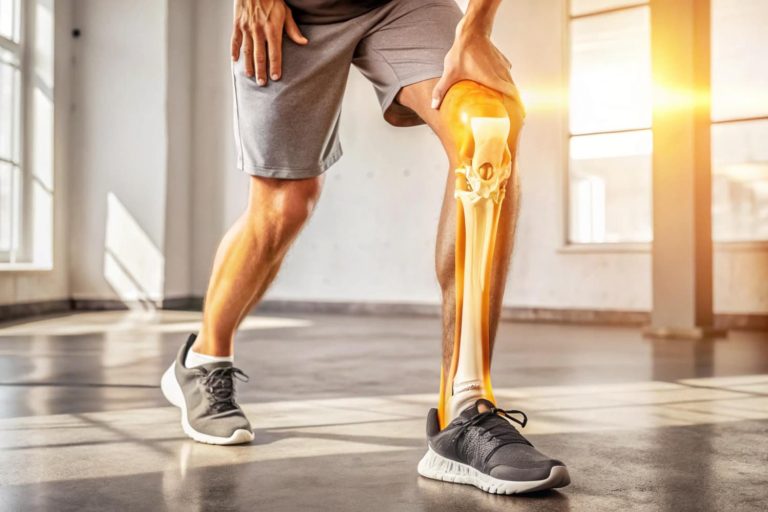
knee pain treatment without surgery NJ
Knee pain does not automatically mean you need surgery. Depending on the cause and severity of the problem, knee pain treatment without surgery in NJ may involve rehabilitation, activity modification, interventional pain management, prolotherapy, or certain regenerative medicine approaches designed around the patient’s diagnosis and functional goals.
The National Institute of Arthritis and Musculoskeletal and Skin Diseases (NIAMS) provides educational information about musculoskeletal conditions, including knee problems, helping patients better understand potential causes and treatment considerations.
For patients dealing with persistent knee pain, the most important first step isn’t choosing a particular procedure. It’s determining why the knee hurts in the first place.
At Stem Cell of NJ in Hazlet, New Jersey, patients can be evaluated to better understand the source of their knee pain and discuss appropriate nonsurgical treatment options.
Why Does My Knee Keep Hurting?
The knee is a complex joint involving bones, cartilage, ligaments, tendons, muscles, and other structures working together.
Pain can develop after a specific injury, but it can also appear gradually because of repetitive stress, age-related changes, altered movement mechanics, or underlying joint conditions.
Common problems associated with knee pain can include:
- Ligament injuries
- Tendon problems
- Meniscus injuries
- Osteoarthritis and degenerative changes
- Overuse injuries
- Muscle weakness or imbalance
- Previous injuries
- Joint instability
- Sports-related injuries
This is one reason why searching online for the “best knee pain treatment” can be misleading.
Different causes of knee pain require different treatment strategies.
The Diagnosis Matters More Than the Treatment Name
Patients often arrive at a medical office already asking about a particular procedure.
They may ask:
“Do I need an injection?”
“Could regenerative medicine help my knee?”
“Can prolotherapy help?”
“Can I avoid knee surgery?”
These are reasonable questions, but there is an even more important question:
What is actually causing the knee pain?
Two people of the same age can have pain in almost exactly the same location and still have very different underlying conditions.
Before determining an appropriate treatment strategy, a medical evaluation may consider:
- Where the pain occurs
- How and when symptoms started
- Previous knee injuries
- Swelling or stiffness
- Range of motion
- Joint stability
- Strength
- Activities that worsen symptoms
- Previous treatments
- Available diagnostic imaging
- Overall medical history
The objective is to treat the patient and diagnosis, rather than simply treating the word “knee pain.”
What Are the Nonsurgical Options for Knee Pain?
Not every patient experiencing knee pain requires an operation.
Depending on the diagnosis, severity of the condition, medical history, and previous treatment, a physician may discuss several approaches.
| Treatment Approach | Primary Objective | May Be Considered For |
|---|---|---|
| Activity Modification | Reduce aggravating stress | Overuse and activity-related symptoms |
| Physical Rehabilitation | Improve strength, mobility and function | Many musculoskeletal knee problems |
| Interventional Pain Management | Target specific sources of persistent pain | Selected chronic or injury-related conditions |
| Prolotherapy | Stimulate a localized healing response | Selected ligament, tendon or joint problems |
| Regenerative Medicine | Use specific biologic approaches as part of treatment | Selected musculoskeletal conditions |
| Surgery | Repair or replace damaged structures when medically appropriate | Certain severe injuries or advanced conditions |
The presence of nonsurgical options does not mean surgery should always be avoided.
Sometimes surgery is the appropriate treatment.
The goal should instead be to determine whether less invasive approaches are reasonable before proceeding to a more invasive intervention when medically appropriate.
Where Does Regenerative Medicine Fit Into Knee Pain Treatment?
Regenerative medicine has received considerable attention for musculoskeletal and orthopedic problems, but patients should understand that regenerative medicine isn’t one single treatment.
Different procedures can involve very different biological materials, preparation methods, mechanisms, evidence, risks, and regulatory considerations.
That distinction matters.
A responsible medical evaluation should consider whether a particular approach is appropriate for the patient’s actual diagnosis rather than assuming that every painful knee is a candidate for a regenerative procedure.
Patients should also be cautious about claims that a treatment can:
- Completely regenerate cartilage
- Reverse arthritis
- Guarantee healing
- Permanently eliminate knee pain
- Guarantee that surgery will never be necessary
No responsible treatment plan can guarantee an individual patient’s outcome.
What About Prolotherapy for Knee Pain?
Prolotherapy is an injection-based treatment that may be considered for certain musculoskeletal conditions.
The procedure generally involves injecting a solution into specifically targeted areas with the intention of stimulating a localized healing response.
For knee problems, the important issue is again patient selection.
A treatment designed to address one type of ligament, tendon, or joint-related problem won’t necessarily be appropriate for every person experiencing knee pain.
That’s why prolotherapy should be considered only after a proper medical evaluation.
Can Interventional Pain Management Help Knee Pain?
For some patients, persistent knee pain becomes a barrier to movement and rehabilitation.
Pain may cause someone to:
- Walk differently
- Avoid stairs
- Stop exercising
- Reduce recreational activities
- Avoid bending the knee
- Become less physically active
Over time, this can contribute to weakness and reduced function.
Interventional pain management uses targeted approaches to diagnose and manage certain sources of pain.
Depending on the patient’s condition, it may be incorporated into a broader strategy designed to improve comfort, mobility, and participation in rehabilitation or normal activities.
How Do I Know Which Knee Treatment Is Right for Me?
Instead of choosing a treatment based on advertisements or another person’s experience, consider a structured evaluation.
Step 1: Identify the problem
Determine when symptoms started, where the pain occurs, and which movements aggravate it.
Step 2: Evaluate the knee
A healthcare professional can assess mobility, strength, stability, tenderness, swelling, and other clinical findings.
Step 3: Review diagnostic information
When appropriate, previous X-rays, MRI findings, or other diagnostic information may help clarify what’s happening inside the joint.
Step 4: Review previous treatments
What have you already tried?
Physical therapy? Exercise modification? Medication? Previous injections? Surgery?
Knowing what worked—and what didn’t—can influence the next step.
Step 5: Compare reasonable treatment options
The benefits, limitations, potential risks, recovery expectations, available evidence, and alternatives should be discussed.
Step 6: Establish realistic goals
For one patient, success might mean returning to recreational exercise.
For another, it could mean walking comfortably, climbing stairs more easily, or performing normal daily activities with fewer limitations.
Treatment should be connected to measurable functional goals whenever possible.
Is It Better to Treat Knee Pain Early?
Persistent pain shouldn’t automatically be ignored in the hope that it eventually disappears.
Some minor injuries improve with time and appropriate self-care, but continuing to stress an injured or painful knee without understanding the underlying problem may prolong symptoms.
Consider scheduling an evaluation if knee pain:
- Continues despite rest or activity modification
- Frequently returns
- Interferes with walking
- Makes stairs difficult
- Limits exercise or work
- Causes recurring swelling
- Is associated with instability
- Is reducing your normal activity level
Severe trauma, inability to bear weight, obvious deformity, significant swelling, fever associated with a hot or swollen joint, or sudden loss of movement may require prompt medical attention.
What If I’ve Already Been Told I Need Surgery?
A surgical recommendation doesn’t necessarily mean that another physician will recommend a nonsurgical procedure instead.
In some cases, surgery may genuinely be the most appropriate option.
However, patients who want to better understand their diagnosis and available options can consider seeking an additional medical evaluation before making a major treatment decision.
A useful second-opinion discussion should address:
What exactly is damaged?
How severe is it?
What happens if I don’t have surgery now?
Are there reasonable nonsurgical alternatives?
What evidence supports those alternatives for my condition?
What outcome should I realistically expect?
Those questions can help patients make better-informed decisions.
Don’t Just Treat the Knee Pain—Understand It
The goal of knee treatment shouldn’t simply be to make discomfort disappear temporarily.
The bigger objective is to understand what’s causing the symptoms and determine which strategy offers a reasonable path toward better function.
For some patients, that may mean rehabilitation.
For others, it may involve interventional pain management, prolotherapy, or evaluation for an appropriate regenerative medicine approach.
And for certain patients, surgery may still be necessary.
There isn’t one treatment that’s right for every painful knee.
That’s precisely why an individualized evaluation matters.
Schedule a Knee Pain Evaluation at Stem Cell of NJ
If knee pain is preventing you from exercising, working comfortably, climbing stairs, enjoying recreational activities, or simply moving the way you used to, consider having the problem properly evaluated.
Stem Cell of NJ provides evaluations for patients interested in understanding nonsurgical approaches to musculoskeletal pain, including regenerative medicine, prolotherapy, and interventional pain management.
Contact Stem Cell of NJ
Office Location
1354 Route 36
Hazlet, NJ 07730
Tel: 732-264-2233
Tel: 732-END PAIN
Website: https://stemcellofnj.com/